As the summer has run away from me, July was just as busy as June, and only a few times did I get to photograph the birds that are around here.
Second-year Arctic Terns (Rødnebbterne) are few and far between, but I study them each time I see them to be able to separate them from other species if they should appear up here or somewhere on the Mainland. They dont look much like their parents, and are even more interesting!
 |
| Second-year Arctic Tern |
 |
| Second-year Arctic Tern |
The Barnacle Geese (Hvitkinngås) are increasing in numbers up here, and in amongst them are a very few individuals that look different. This is one of about Three leucistic (partial albinism) geese in this population. Often Ive been told that someone has seen a Snow Goose (Snøgås), but when I ask closer often it is one of these that has been seen.
 |
| Leucistic Barnacle Goose |
 |
| Leucistic + normal Barnacle Goose |
On the 15th of July I actually got to see two of the leucistic Barnacles only minutes apart, and took photos of them to show the difference in appearance.
 |
| Leucistic Barnacle Goose #1 |
 |
| Leucistic Barnacle Goose #1 |
 |
| Leucistic Barnacle Goose #2 |
In July the Young birds of the season starts to appear, and I have to start Learning the appearance of them over again. And every year there is a very steep Learning curve.
 |
| Juvenile Red Phalarope (Polarsvømmesnipe) |
 |
| Juvenile Red Phalarope |
 |
| Juvenile Red Phalarope |
 |
| Juvenile Red Phalarope |
 |
| Juvenile Red Phalarope |
 |
| Juvenile Red Phalarope |
Chasing after the little chicks on the tundra, trying to ring them is one of my favourite activities during late summer. This Ringed Plover (Sandlo) chick ran across the road in front of my car, and five minutes later it had ring and flag with code on it.
 |
| Common Ringed Plover, ringed in my car. |
The Red-necked Phalarope (Svømmesnipe) is an uncommon breeder on Svalbard, and this year I found what is probably the only brood on the Island. These cute little chicks are allmost impossible to see when they are hiding in the grass.
 |
| Red-necked Phalarope chick hiding |
 |
| Daddy tries to round up its chicks. |
When I had given the happy family some distance, the chicks hid in the grass and the father came flying next to me and landed on one of the smaller ponds.
 |
| Red-necked Phalarope |
 |
| Red-necked Phalarope |
 |
| Red-necked Phalarope |
Later in teh evening when all the tourists had left the valley, I headed back out and found the brood of Red-necked Phalaropes again. When the father had rounded all the three chicks up underneeth him I got the cahnce to ring the first brood of this species ever on Svalbard. They are, as with most wader-chicks, some of the most beautifull little creatures on earth!
 |
| Red-necked Phalarope chick in hand |
 |
| Red-necked Phalarope chicks released after ringing. |
 |
| Daddy comes over and takes care of his youngsters |
The next day I did a late trip in the same area, and got the chance to ring this little beautifull baby Red Phalarope. This is a great opportunity to compare teh chicks of these two closely related species.
 |
| Red Phalarope chick in hand |
 |
| Red Phalarope chick after release. |
Of the birds that most birders who visit here want to see, the Ivory Gull (Ismåke) is often the one I am asked about. This pure white, medium-sized gull, is one of my favourites. I have gotten so used to it that most times that I see it I just think that its just another Ivory Gull. But one day while out looking for wader-chicks I found two adults feeding in the dogyard. I just could not let this opportunity disappear, and got out of my car with the camera. Both birds were showing really nice, even though I did not get the photo I wanted where one of them would be right in front of the sun. But who can complain when you have two beautiful birds alternating on flying around you, just a few meters away. I got to have a photo-session with one of the most prized birds up here, and I know there are a lot of perople who would be thrilled to have the same experience.
 |
| Ivory Gull in front of a green slope |
 |
| Ivory Gull in front of dogyard |
 |
| Ivory Gull with curious Huskies |
 |
| Ivory Gull in afternoon sunlight |
 |
| Ivory Gull in flight |
 |
| Ivory Gull against clouds |
 |
| Ivory Gull against clouds |
 |
| Ivory Gull against the mountains |
It is allways really nice to see my birds again after I have had them in hand. The Red-necked Phalaropes stayed in the same area for a long time, and I got to see the chicks grow, and I even got to see teh female in the pair start to change into Winter-plumage. Unfrotunately I did not get to photograph this, but I did get some other pics of the little family.
 |
| Red-necked Phalarope chick hiding in the grass. |
 |
| Adult Red-necked Phalarope showing off. |
 |
| Adult Red-necked Phalarope swimming |
 |
| Red-necked Phalarope chick next to the pond |


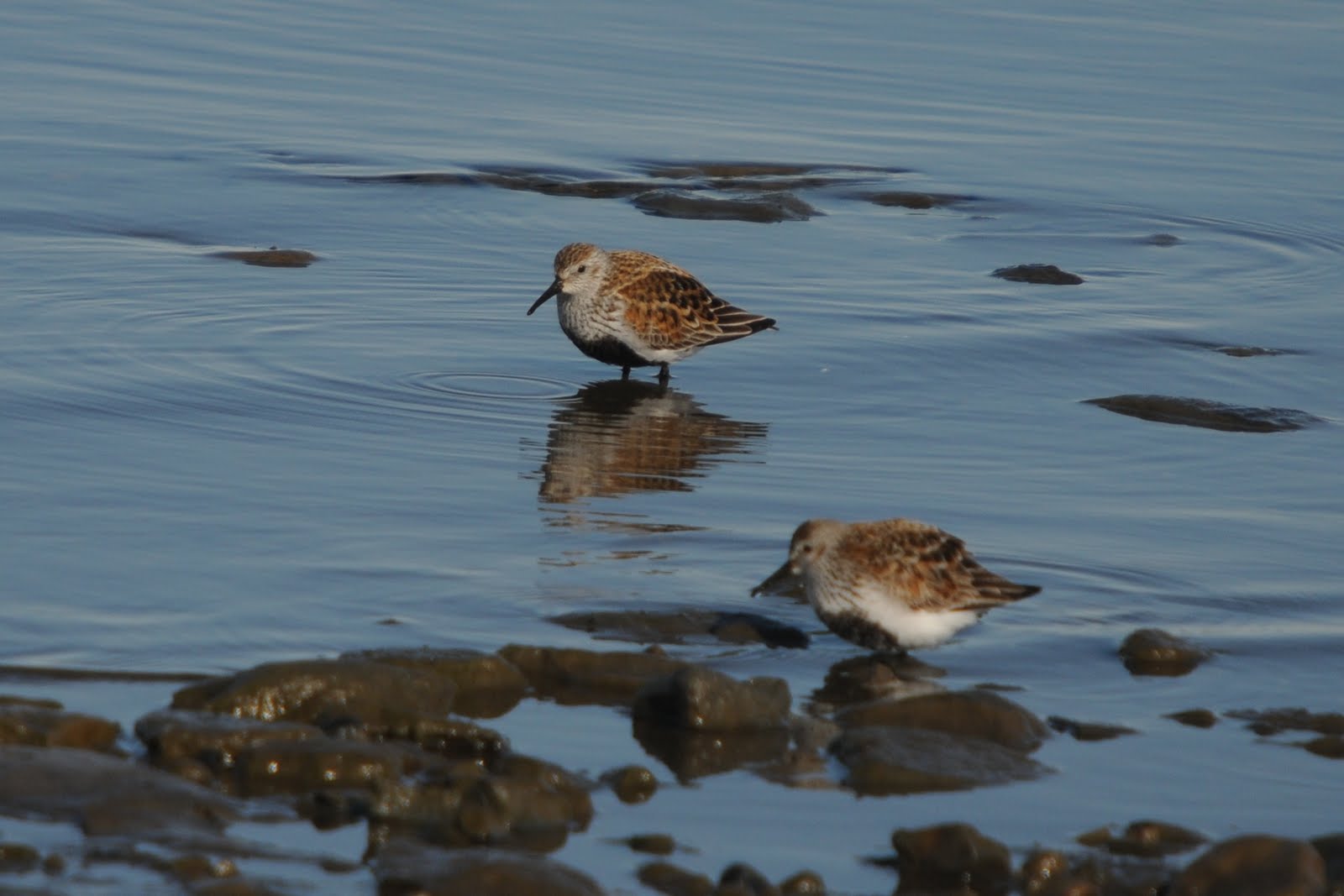


.jpg)


